The Dive, 2/1/26
Your monthly compilation of what's what on global politics, American society, and an assortment of odds and ends

Quote of the Month
"...whole nations and peoples have undertaken to destroy their tyrannical rulers, both when they've suffered and when suffering has been threatened. Sometimes tyrants' own guards have risen up and treated them treacherously, impiously, savagely, and in whatever other vicious way tyrants have trained them to behave. What else can a person expect from someone he has taught to be evil?  Wickedness doesn't stay subservient for long, or misbehave only so far as it's ordered."

- Seneca, On Clemency, 1.26.1
What I’m Reading:
1. How Trump sabotaged NASA’s science mission
Why you should read it: In The Atlantic, Ross Andersen details the ways the Trump administration has tried to cripple NASA’s awe-inspiring and world-beating science missions.
“Perseverance is among the latest in a lineage of interplanetary robotic explorers that NASA has built across almost 60 years, for about $60 billion. That’s less than what Mark Zuckerberg spent on his struggling metaverse. At NASA, it paid for hundreds of spacecraft that have flown past all of the solar system’s planets, dropped into orbit around most of them, and decelerated from flight speed to reach the surface of a few. These missions have disclosed the scientific qualities of other worlds, as well as the look and feel of them, to all humanity, and for posterity too… Last spring, President Donald Trump bluntly expressed his vision for science at NASA in his first budget request. Along with extensive layoffs, he called for 40 of the agency’s 124 science missions, including Mars Sample Return, to be defunded, and for the surviving missions to make do with less. Among NASA scientists, the request was demoralizing; within months, its major science centers lost thousands of staffers to buyouts and cutbacks… Only the governments of rich countries send robotic explorers to other planets. And only the United States has sent them past the asteroid belt to Jupiter and beyond. For decades, this has been a part of America’s global cultural role: to fling the most distant probes into the solar system, and to build the space telescopes that see the farthest into the cosmos. The U.S. has led an unprecedented age of cosmic discovery. Now Trump is trying to bring that age to an end, and right at the moment when answers to our most profound existential questions finally seem to be within reach.”
“Work like this requires world-class scientific infrastructure and skill. By April, Trump appeared to be trying to rid NASA of both. The White House had already offered government workers a blanket buyout. Janet Petro, whom Trump had appointed acting administrator of NASA, was openly encouraging staffers to take it… Trump’s budget request, released in May, called for a 47 percent cut in funding for the agency’s science missions and deep reductions in staff at its major science centers, JPL and Goddard Space Flight Center. Congress hasn’t passed this request, and as of this writing it seems likely to reject Trump’s severe cuts… Every NASA science unit was told to draw up a new budget, [senior NASA science advisor David] Grinspoon said. It was like planning a strike on the fleet of spacecraft that the agency has spread across the solar system. If the cuts in the request were implemented, satellites that monitor the advance and retreat of Earth’s glaciers, clouds, and forests would splash down into an undersea graveyard for spacecraft in the remote Pacific Ocean. A robot that is on its way to study a gigantic Earth-menacing asteroid would be abandoned mid-flight, as would other probes that have already arrived at the sun, Mars, and Jupiter. The first spacecraft to fly by Pluto is still sending data back from the Kuiper Belt’s unexplored ice fields. It took almost 20 years to get out there, and the small team that runs it costs NASA almost nothing. It would be disbanded nonetheless, and contact with the probe would be forever lost. Future missions to Venus, Mars, and Uranus would also be scrapped.”
Why it matters: ““A full accounting of Trump’s assault on American science will have to wait for historians, and we cannot yet say what the worst of it will be. His appointment of a charlatan to lead the country’s largest public-health agency may well prove more detrimental to Americans’ daily lives than anything he does to NASA. But his attempt to ground the agency’s science missions suggests a fundamental change in the country’s character, a turning inward. America’s space telescopes and probe missions have not only torn the veil from nature. They’ve had an ennobling effect on American culture; to the world, they’ve projected an elevated idea of Americans as competent, forward-looking adventurers, forever in search of new wonders.”
2. How Trump’s nineteenth century foreign policy will make America less secure and poorer
Why you should read it: Also in The Atlantic, foreign policy writer Robert Kagan outlines how Trump’s desire to return to the nineteenth century will make the world a more dangerous and less prosperous place—particularly for the United States.
““The Trump administration’s National Security Strategy made it official: The American-dominated liberal world order is over. This is not because the United States proved materially incapable of sustaining it. Rather, the American order is over because the United States has decided that it no longer wishes to play its historically unprecedented role of providing global security… Americans are entering the most dangerous world they have known since World War II, one that will make the Cold War look like child’s play and the post–Cold War world like paradise. In fact, this new world will look a lot like the world prior to 1945, with multiple great powers and metastasizing competition and conflict. The U.S. will have no reliable friends or allies and will have to depend entirely on its own strength to survive and prosper. This will require more military spending, not less, because the open access to overseas resources, markets, and strategic bases that Americans have enjoyed will no longer come as a benefit of the country’s alliances… Americans are neither materially nor psychologically ready for this future. For eight decades, they have inhabited a liberal international order shaped by America’s predominant strength. They have grown accustomed to the world operating in a certain way: Largely agreeable and militarily passive European and Asian allies cooperate with the United States on economic and security issues. Challengers to the order, such as Russia and China, are constrained by the combined wealth and might of the U.S. and its allies. Global trade is generally free and unhampered by geopolitical rivalry, oceans are safe for travel, and nuclear weapons are limited by agreements on their production and use. Americans are so accustomed to this basically peaceful, prosperous, and open world that they tend to think it is the normal state of international affairs, likely to continue indefinitely. They can’t imagine it unraveling, much less what that unraveling will mean for them.”
“Some pundits who welcome a post-American world and the return of multipolarity suggest that most of the benefits of the American order for the U.S. can be retained. America just needs to learn to restrain itself, give up utopian efforts to shape the world, and accommodate ‘the reality’ that other countries ‘seek to establish their own international orders governed by their own rules,’ as Harvard’s Graham Allison put it. Indeed, Allison and others argue, Americans’ insistence on predominance had caused most conflicts with Russia and China. Americans should embrace multipolarity as more peaceful and less burdensome. Recently, Trump’s boosters among the foreign-policy elite have even started pointing to the early-19th-century Concert of Europe as a model for the future, suggesting that skillful diplomacy among the great powers can preserve peace more effectively than the U.S.-led system… As a purely historical matter, this is delusional. Even the most well-managed multipolar orders were significantly more brutal and prone to war than the world that Americans have known these past 80 years. To take one example, during what some call the “long peace” in Europe, from 1815 to 1914, the great powers (including Russia and the Ottoman empire) fought dozens of wars with one another and with smaller states to defend or acquire strategic advantage, resources, and spheres of interest. These were not skirmishes but full-scale conflicts, usually costing tens—sometimes hundreds—of thousands of lives. Roughly half a million people died in the Crimean War (1853–56); the Franco-Prussian War (1870–71) resulted in about 180,000 military and up to 250,000 civilian deaths in less than a year of fighting. Almost every decade from 1815 to 1914 included at least one war involving two or more great powers… Precisely to escape this cycle of conflict, the generations of Americans who lived through two world wars laid the foundations of the American-led liberal world order. They were the true realists, because they had no illusions about multipolarity. They had lived their entire lives with its horrific consequences.”
Why it matters: “The consequence of a newly unreliable and even hostile United States, therefore, will likely be significant military buildups by former allies. This will not mean sharing the burden of collective security, because these rearmed nations will no longer be American allies. They will be independent great powers pursuing their own strategic interests in a multipolar world. They will owe nothing to the United States; on the contrary, they will view it with the same antagonism and fear that they direct toward Russia and China. Indeed, having been strategically abandoned by the U.S. while suffering from American economic predation and possibly territorial aggression, they are likely to become hotbeds of anti-Americanism. At the very least, they will not be the same countries Americans know today… In a multipolar world , everything is up for grabs, and the flash points for potential conflict proliferate. The American order for eight decades provided not only security commitments to allies and partners but also common access to vital resources, military bases, waterways, and airspace—what theorists call ‘public goods.’ In the absence of the United States playing that role, all of these once again become targets of a multisided competition… Trump has managed in just one year to destroy the American order that was, and he has weakened America’s ability to protect its interests in the world that will be. If Americans thought defending the liberal world order was too expensive, wait until they start paying for what comes next.”
3. How to tell when Trump doesn’t really care about something in foreign policy
Why you should read it: On his Substack, historian Phillips P. O’Brien observes that “Donald Trump has one great tell that an issue really does not matter to him… when he acts like he cares about the human beings involved in the matter.”
“When Trump says he wants the killings of some people to stop or the oppression of others to end, it is the clearest indication that he could not care less… Ukraine might be the clearest example of Trump’s “tell” recently, but it is certainly not the only one. Since long before his last election Trump has said repeatedly that he was desperate to see the killing of Ukrainians to end, to save the Ukrainian people from more misery and death. In fact his supposed need to preserve Ukrainian lives (and in some cases Russians) was given as a key part of his boast that he would end the war in 24 hours… Of course, what Trump has actually been doing over the last year is making it far easier for Putin to kill Ukrainians on the battlefield and the home front by protecting the Russian dictator, starving Ukraine of weapons and leaving Ukrainian cities far less well defended than they should have been. Trump helped create the humanitarian catastrophe now in Ukraine by making it much easier for Putin to freeze Ukrainians cities and he started this process almost immediately after he became president.”
“So, Trump has never cared about Ukrainian lives for a moment and the fact that he shed crocodile tears about them was the greatest tell that he was lying. The same, it must be said, has just occurred with the Venezuelans and the Iranians. In both cases, Trump acted like he cared about their well-being, that his actions in their cases would be based on his sympathy for them as human beings battling oppressive regimes… In other words, Trump simply does not care about people. He uses expressions of caring as a political tool, but nothing more. And the more he uses the expressions, the more you can be sure he does not care… He actually cares about things that reflect on his perceived greatness. This is what energizes him, obsesses him and drives his choices. It also explains his relationship with Putin. For whatever reason, Trump has determined that his relationship with Putin is the way to greater glory (and his relationship with President Xi as well). As such these relationships will always win out in the end.”
Why it matters: “You can be sure that if Trump expresses any public sentiment or concern for people, it is a tell that he really does not give a damn. If he discusses a monument to his own greatness, that is what matters to him.”
4. Why we’re heading toward a personalist world order
Why you should read it: International relations scholars Seva Gutinsky and Semuhi Sinanoglu argue in Foreign Affairs that Trump, along with Putin and Xi, are taking the world into a new world order grounded on the personal whims of autocratic rulers.
“For scholars of American foreign policy, the idea that a U.S. president—even Trump—would decapitate a foreign government because he felt mocked may seem shocking. But Trump is a personalist leader: one that concentrates power around himself and his inner circle. Personalists differ from ordinary autocrats or dictators in that they hollow out the governing bodies and institutions—such as political parties, militaries, and bureaucracies—that support the regime and would otherwise channel policy options through mechanisms of collective deliberation shaped by the authoritarian’s vision. Personalists are instead driven purely by their own private fixations and incentives rather than coherent national interests. In Trump’s case, those fixations include flattery, personal enrichment, gaining access to natural resources, and dominating the Western Hemisphere. And for a leader with these aims, attacking Venezuela and taking Maduro made sense. That it does not advance Washington’s global position—the strike was roundly condemned by many U.S. allies and is likely to prompt Latin America to hedge against a more menacing Washington—does not matter at all. ‘My own morality. My own mind,’ Trump told The New York Times when asked if there were limits on his global power. ‘It’s the only thing that can stop me. I don’t need international law…’ For the first time since the 1930s, the world’s most powerful countries—China, Russia, and the United States—are all governed by personalist leaders. They hoard authority and silo themselves in informational bubbles. Chinese leader Xi Jinping, for example, has centralized policymaking and repeatedly purged senior officials, discouraging deliberation among his advisers. Russian President Vladimir Putin has also concentrated power and retreated into a self-made echo chamber. Driven by a personal preoccupation with revisionist Russian history, he lectures the world on historical figures such as Rurik of Novgorod and Yaroslav the Wise, who he claims justify Moscow’s ownership of Ukraine.”
“A personalist global system is one of uncertainty, corruption, and private bargains. Self-interested leaders are open to showy deals that discard or weaken alliances and entrenched commitments in exchange for immediate personal victories. The Trump administration’s attempt to orchestrate a comprehensive land-for-peace deal between Russia and Ukraine is one example. So is Trump’s effort to secure a grand bargain with China, in which Beijing would increase its purchases of U.S. goods and, if the past is any guide, offer commercial advantages to businesses that are connected to him. In exchange, Trump might consider reducing U.S. support for Taiwan—the president has vacillated on how much to back it—or lifting export restrictions… In a fractured personalist world, there will be far fewer checks to stop these leaders from acting on their impulses. If personalist leaders wind up squaring off against each other during a crisis, they may be more likely to escalate than would normal leaders. Personalists, after all, are reassured by sycophantic advisers and thus have fewer reasons to stand down. This tendency is alarming given that China, Russia, and the United States possess the world’s largest nuclear arsenals and that guardrails against further proliferation appear to be collapsing.”
Why it matters: “Studies of personalist regimes consistently show they are more reckless, aggressive, and conflict-prone than other kinds of governments. They are more likely to break alliances, stumble into crises, and start dumb wars. These effects will be amplified now that the world’s strongest states are controlled by isolated and unaccountable leaders. A personalist global order, in other words, is one of increasing corruption, volatility, and violence… The emerging global system is one in which three nuclear-armed leaders, insulated from dissent, pursue risky gambits. The result will not be the relatively stable if tense competition that characterized the Cold War. It will be something more volatile: a world in which the most consequential decisions rest on the whims of men who have systematically discarded anyone willing to tell them no.”
5. What Silicon Valley doesn’t get about defense
Why you should read it: Vanderbilt professor and former Biden Pentagon official Margaret Mullins explains why Silicon Valley’s attempt to muscle into the defense industry fail to grasp how it works.
“Defense acquisition is, indeed, broken. The United States cannot produce critical materiel at speed and at scale in a moment of crisis. Despite spending more on defense than the next nine countries combined, the United States faces a crisis of both modernization and production. Recently, an emergent group of Silicon Valley defense tech leaders and their funders, including Alex Karp, the CEO of Palantir; Palmer Luckey, the founder of Anduril; and Katherine Boyle, a co-founder of the Andreessen Horowitz venture capital firm American Dynamism, have blamed excessive government regulation and interventionism for this unhappy state of affairs. Too much funding, they say, flows to large legacy programs and prime contractors… Their declinist narrative is convenient, but it is inaccurate. The [post-Cold War] Last Supper did not usher in the industry’s dark era. By the time Aspin and Perry held the dinner [calling on defense contractors to consolidate], the defense industry, like nearly all U.S. manufacturing sectors, had already been weakened by globalization and the financialization of the U.S. economy, drawdowns in the defense budget since 1986, and a broader effort to remake the government in the image of private business. Indeed, after the Last Supper, policymakers repeatedly did exactly what Silicon Valley’s tech leaders suggest today as a solution for the department’s ills: they deregulated the industry and outsourced production capacity to the private sector. In fact, such strategies helped create the very problems that now plague the industry.”
“The modern U.S. defense industrial base took shape following World War II, benefiting from the enormous investments made by the government and the decimation of foreign production capacity wreaked by the war. Before the war, the government had researched, developed, and produced most weapons in-house, at public arsenals, shipyards, and laboratories. During World War II, the government had enlisted the help of blue-chip companies such as Chrysler and IBM to manufacture a variety of defense-related products, from tanks to engines to rifles. This generally fruitful partnership between the military and industry endured after the war ended, undergirding the early Cold War effort to beat the Soviet Union in a technological competition and sparking innovation in national security with positive spillover benefits to the broader U.S. economy… By the 1970s, however, overseas manufacturing and technology markets began to reemerge. Foreign governments subsidized the domestic production of electronics, ships, aircraft parts, and more, and U.S. defense companies were forced to find ways to remain competitive. Taking advantage of lower labor costs overseas, U.S. producers moved parts of their supply chains to Asia and Europe. Then, the 1980s brought ‘financial engineering’ to defense. Threats of hostile takeovers, defensive restructuring, and ruthlessly profit-maximizing executives saddled companies such as Lockheed and Martin Marietta with debt, leaving them weak and increasingly dependent on the Defense Department’s largess to stay afloat… A defense spending boom at the heart of President Ronald Reagan’s hawkish Cold War strategy in the early 1980s masked the damaging effects that globalization and financialization had on the industry, but only temporarily. When Reagan began to draw down defense spending in 1986, the move only hastened the hollowing out of the bloated sector… Instead of compensating for U.S. defense firms’ offshoring, consolidation, and constriction by bolstering domestic capacity, the government mimicked the private sector’s trends. For the Defense Department, this meant shedding its organic production capacity. Shifting the production of several core military capabilities to the private sector resulted not in a cost-efficient transfer of production but in the outright disappearance of some production capability. Take shipbuilding. Before World War II, public shipyards managed almost half the research, design, construction, and maintenance of the U.S. Navy’s ships. From 1953 to 1960, private shipyards’ share in new ship construction and repair contracts rose from 55 to 85 percent. But by the 1970s, some large private builders had stopped bidding on navy work. Instead of reinvesting in a public option, the Reagan administration further limited the government’s role, eliminating the construction subsidy program that had underpinned the commercial shipbuilding business since the 1930s. Domestic shipbuilding, for the navy or the commercial sector, never recovered.”
Why it matters: “Defense tech leaders’ alternative vision for procurement is likely to fail, just as previous deregulatory efforts did. Washington should not rush to accept Silicon Valley’s critique as gospel. Instead, it should accept that national defense is not a normal competitive market and never will be and invest in the government’s own capacity to oversee military production, incorporate new technology, and manage competition… If the Department of Defense wants to build a combined industrial base that can respond to the eruption of a conflict, it will have to pay for it. Washington should be willing to accept the higher costs that come with contracts that include provisions mandating that suppliers are capable of surging production if required. It should also ensure that the arsenals, shipyards, and depots that make up the Defense Department’s organic industrial base receive adequate funding. Critics may argue that expanding a near-trillion-dollar defense budget would be irresponsible, but it will cost less to maintain capacity in and outside government than to rapidly build or buy that capacity in a time of urgent need. Rather than relying on episodic crisis spending, Congress and the Defense Department should steadily invest in both the government’s and industry’s facilities, capital equipment, and manufacturing technology.”
6. Living in a clicktatorship
Why you should read it: On his Substack Can We Still Govern?, University of Michigan public policy scholar Don Moynihan posits that the Trump administration is obsessed not with governing but making content.
“One of the strangest moments to emerge from the U.S. kidnapping of Nicolás Maduro was the flurry of images posted by President Trump on Truth Social. It felt a bit like a student who can’t decide which spring break photos look cutest, so they just upload them all… With the best intelligence systems in the world at their fingertips, they were checking X in the midst of the mission? Combined with the curtains separating some section of Mar‑A‑Lago from the rest of the President’s resort, the images create an almost surreal air. It felt as if a group of twelve-year-old boys in a basement had been handed control of the most lethal military in history—and were using it to boost their online brands… I want to suggest that what we are witnessing from the Trump administration is not just skillful manipulation of social media—it’s something more profoundly worrying. Today, we live in a Clicktatorship, ruled by a LOLviathan. Our algothracy is governed by poster brains.”
“What do I mean by a Clicktatorship? A Clicktatorship is a form of government that combines a social media worldview with authoritarian tendencies. Government officials in the Clicktatorship are not just using online platforms as a mode of communication; their beliefs, judgment, and decisionmaking reflect, are influenced by, and are directly responsive to the online world to an extreme degree. The Clicktatorship views everything as content, including basic policy decisions and implementation practices… What I’m arguing is that the Trump administration isn’t just using social media to shape a narrative. Many of its members are deeply addicted to it. We would be concerned if a senior government official was an alcoholic or drug addict, knowing it could impair judgment and decisionmaking. But we should be equally concerned about Pete Hegseth and Elon Musk’s social media compulsions—just as much as their alcohol or ketamine use, respectively.”
Why it matters: “I’m just scratching the surface here. Pick any federal agency, and you can find examples of poster brains making important decisions. This trend is likely to only get worse as digital natives enter key government roles. And there are likely a host of other ways these patterns are undermining the professional behavior of people in government that I have not identified. In particular, the Trump administration represents the intersection of poster brain, personalism, and authoritarianism that seems especially toxic… The bottom line is that it we need to take more seriously how social media has rewired the brains—and behavior—of those running our country.”
7. How ICE’s brutality displays the Trump administration’s weakness
Why you should read it: Berkeley politics professor Omar Wasow makes the case in the New York Times that the brutal paramilitary occupation of Minneapolis by ICE and CBP is a display of regime weakness, not strength.
“What we are seeing is the weakness of strong states. Regimes that rely on repression face a challenge: The more force they deploy, the more they risk exposing their own brutality to politically persuadable observers. Overreach doesn’t just project strength; it also undermines legitimacy… But spectacle cuts both ways. The same cameras that broadcast enforcement operations also capture repression. Winning a physical fight isn’t the same as winning an argument.”
“Consider Birmingham, Ala. In the early 1960s, Bull Connor’s fire hoses and police dogs were meant to restore order during civil rights demonstrations. Instead, they revealed the brutality of segregation to an international audience. Movement leaders chose Birmingham strategically, thinking Connor would overreact — and he obliged. John Lewis called it dramatizing injustice. Connor thought he was defending a way of life, but he was digging its grave… Now the Minneapolis deaths are shaping public opinion. One poll found that 82 percent of American voters have watched a video of the killing of Ms. Good. Majorities say the shooting was unjustified… The political question is not whether there has been disorder, but rather whom the public holds responsible for the killings in Minneapolis.”
Why it matters: “This month, Renee Good was killed in her car after stopping for immigrant neighbors. Alex Pretti was killed coming to a woman’s aid. Visible state violence against sympathetic civilians was the beginning of the end for Jim Crow. It may be a turning point now, too.”
8. Why it’s so hard to hold the federal government responsible for breaking the law
Why you should read it: Also in the New York Times, conservative legal writer David French lays out just why it will prove difficult to hold the federal government responsible for the murders of Renee Good and Alex Pretti.
“Imagine for a moment that you’re a member of Renee Good’s family. You’re mourning her death at the hands of an ICE agent in Minneapolis, and you want justice… You didn’t have high hopes that the Trump administration would hold anyone accountable, but surely the next administration could? There’s no statute of limitations for murder, right?… We can still sue the officer, can’t we? Even if the government can’t or won’t prosecute, we’ll still want to hold him liable… ‘I’m sorry,’ the lawyer replies, ‘but there is almost no chance that will work. There’s a federal statute that gives you the ability to sue state and local officials when they violate your constitutional rights, but there’s no equivalent law granting the right to sue federal officials…’ And there you have it — that’s the challenge any citizen faces when he or she tries to hold the federal government responsible for violating the Constitution. The government is defended by a phalanx of immunities and privileges, buttressed by the president’s unchecked pardon power — a vestige of royal authority that should no longer have any place in our constitutional republic.”
“President Trump is stress-testing American law, and the law is failing the test. The health of the American experiment rests far more on the integrity of any given American president than we realized… We trusted that presidents would impose accountability on the executive branch. We trusted that presidents wouldn’t abuse their pardon power — or, if they did, then Congress could impeach and convict any offenders. And so we manufactured doctrine after doctrine, year after year, that insulated the executive branch from legal accountability… It’s hard to overstate how much this web of immunities — combined with the failure of Congress to step up and fulfill its powerful constitutional role — has made the United States vulnerable to authoritarian abuse… In the Trump era, those auxiliary precautions have utterly failed. They’ve been undermined to the point where the reverse is now true. Rather than providing additional precautions against the rise of authoritarian rule, American law and precedent seem to presume that angels govern men, and those angels would be free to do even more good if only they possessed a free hand.”
Why it matters: “Eventually the people will elect a bad and corrupt person to the presidency, and he will wield every tool, power and prerogative that was designed for good to build his own edifice of oppression and greed… If we can endure this crisis, there will be a time of reflection and reform. It happened after the Civil War. It happened during the civil rights movement. It happened after Watergate. And when the time for reform comes again, it must focus on the abolition of the prerogative state.’
9. What the families of fallen Danish soldiers have to say to and about Trump
Why you should read it: The Atlantic’s Isaac Stanley-Becker reports on what the families of Danish soldiers lost in Afghanistan have to say about Trump’s warmongering and denigration of their nation and its sacrifices.
“It was sunny in southern afghanistan on June 1, 2010, and the temperature quickly reached 104 degrees. Sophia Bruun was the gunner on a Piranha combat vehicle, guarding two platoons conducting a patrol near the town of Gereshk… One of the Piranhas in Sophia’s battle group had hit an IED first thing in the morning, blowing off a wheel, but no one was injured. At the outskirts of a village, they were fired on by the Taliban. They returned fire, and the situation calmed. The patrol continued. But seven minutes after noon, an IED went off under Sophia’s vehicle, flipping it. She was killed instantly, at the age of 22… But these days, Sophia’s mother [Lene] knows exactly what triggers her grief: ‘when Trump says we’re not good enough.’ Bruun is a tiny woman, with soft white hair and fine lines grooved into her pale skin. But she became flushed when discussing the American president, who has been threatening to seize Greenland, an autonomous territory of Denmark. ‘Keep your fingers away,’ she said with a swatting motion, as if to thwart Trump’s land grab… ‘It’s not right what he’s saying,’ Bruun protested. ‘We have done so much for America.’ For the families of Danish soldiers who died in the American-led campaign against the Taliban, their country’s partnership with the United States is not an abstraction. Denmark’s loyalty to America brought Sophia Bruun to Afghanistan, and it ended her life.”
“Denmark is small, with a population of just 6 million. But it has tried to uphold its end of the [NATO] bargain. It lost more soldiers per capita than the United States did in Afghanistan. In all, there were 43 deaths, a sacrifice that Danes accepted as the cost of their international obligations. Sophia was the first female soldier to fall in combat in Danish history, her death a ripple effect of the September 11 attacks, the first time that NATO’s mutual-defense clause was invoked. Triggering Article 5 obligated U.S. allies to assist, including by sending soldiers like Sophia to fight. This time, if Article 5 is invoked, the United States might be the aggressor… [W]hen I traveled to Denmark this month, I found there was still fidelity to principles that seem to have vanished from the American government’s calculations, namely a sense of mutual obligation and basic morality… ‘We risked our lives by participating in an operation far from our home,’ [deputy Afghanistan commander Peter] Boysen, who is now chief of the Danish army, told me. And because the fight was in support of a NATO ally that had come under attack, he said, it was worth it… Danes are incredulous about the threats emanating from Washington, and angry. I spoke with former soldiers who said they were preparing to ditch their iPhones and Gmail accounts in favor of European alternatives. This month, officials in Denmark’s third-largest municipality vowed that they would continue funding an annual celebration of Independence Day—believed to be the largest event marking July 4 outside the United States—only if official representatives of the U.S. government were excluded.”
Why it matters: “Danes have a sophisticated understanding of U.S. politics, and they take pains to separate the president from the rest of the population. Still, their goodwill is not infinite… It is a new world, I thought—one in which small countries, like Denmark, that have bound themselves tightly to Washington have a lot to worry about: Russia bearing down on Europe, the United States retreating to the Western Hemisphere, and China flexing its power in Asia. Denmark has been an especially generous donor to Ukraine, so much so that one U.S. official groused to me that the country had left its own cupboard bare. That’s of a piece with Denmark’s military track record. It’s been a capable and accommodating partner in foreign wars. But its capacity to defend itself, not least Europe and the parts of its territory that stretch into North America, is limited. Danes, of course, never imagined they might need to defend themselves against the United States.”
Odds and Ends
A profile of the French Revolutionary and Napoleonic-era painter Jacques-Louis David and his work…
Why T. rex may never have stopped growing—and lived longer than paleontologists previously believed…
How the contents of a mummified wolf pup’s last meal revealed new clues about the extinction of the woolly rhinoceros…
Ötzi the Iceman—the 5,300-year-old ice mummy discovered in the Italian Alps in 1991—may have carried a cancer-causing strain of HPV…
A baby boom among right whales—whose overall population numbers in the hundreds—offers a ray of hope for the endangered species…
What I’m Listening To and Watching
Wonder Man, which sees the struggling and super-powered actor Simon Williams (Yahya Abdul-Mateen II) team up with washed-up British thespian Trevor Slattery (Ben Kingsley, reprising his role from Iron Man 3) to win the lead role in the latest superhero blockbuster.
Ponies, an espionage thriller set in late 70s-era Moscow and starring Emilia Clarke (Game of Thrones) and Haley Lu Richardson as two widows of CIA agents who become spies themselves to uncover the truth about their husbands’ deaths.
Good Night, and Good Luck: Live From Broadway, the stage adaptation of the 2005 film depicting journalist Edward R. Murrow’s (George Clooney) fight against Sen. Joseph McCarthy.
The Rip sees a pair of burned-out Miami counternarcotics cops (Matt Damon and Ben Affleck) stumble upon a massive stash of hidden cartel cash and clash over what to do with it.
“The Streets of Minneapolis,” a Seeger- and Guthrie-esque protest song by Bruce Springsteen on the Trump administration’s murderous paramilitary occupation of Minneapolis.
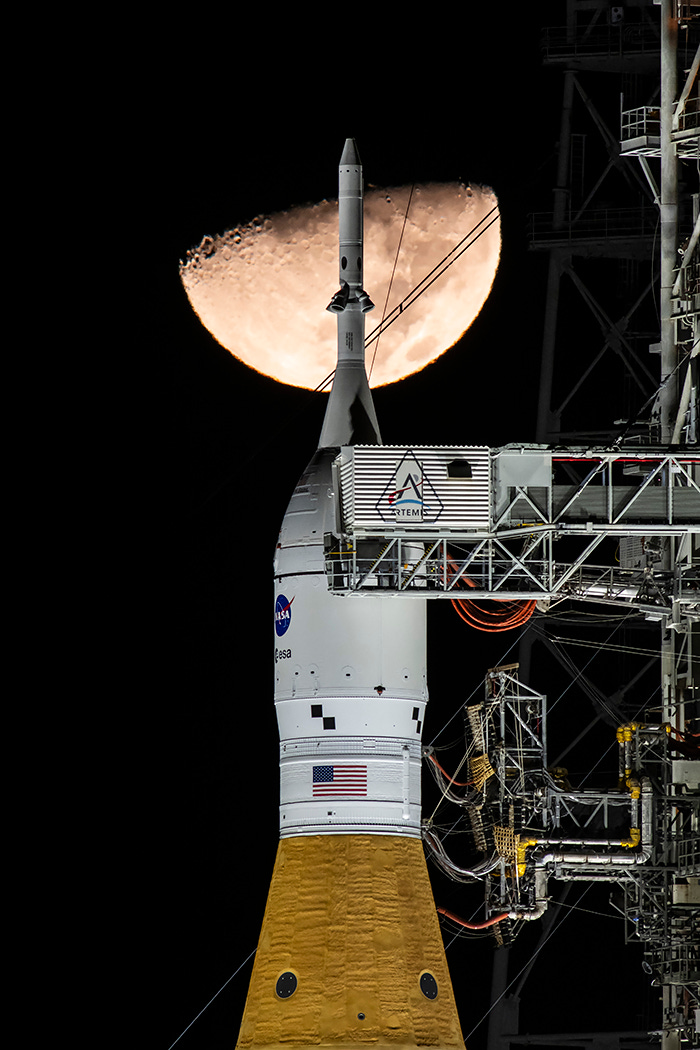
Image of the Month